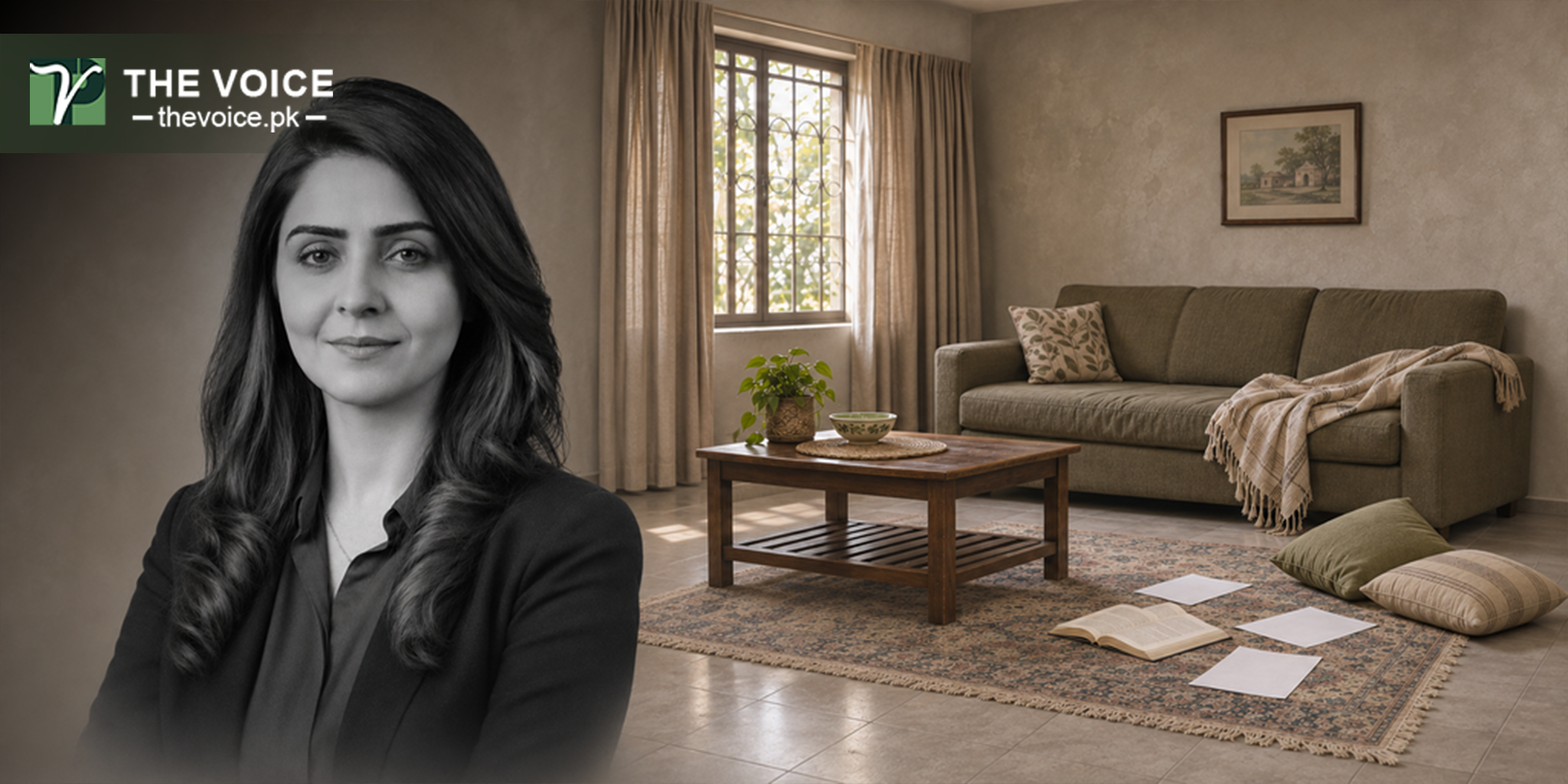
The killing of television anchorperson Rabia Ahsan in Rawalpindi has renewed concerns about violence against women, particularly after another professional woman, Hina Javed, was found dead in the same city just months earlier.
A Journalist’s Death Raises Serious Questions
Pakistan’s journalist community is mourning the death of 41-year-old television anchorperson Rabia Ahsan, who was found shot at her residence in Rawalpindi’s Gulshanabad area on November 8. She was associated with 92 News and had presented her last television programme on Saturday night.
Her husband, Ahsan Tahir, was taken into custody after the incident. Police recovered a 30-bore pistol and registered a murder case under Section 302 of the Pakistan Penal Code at Sadar Bairuni Police Station on the complaint of Rabia’s brother, Khurram Ahmed. Police also said the suspect had not produced a valid licence for the weapon.
The suspect reportedly told investigators that the firearm had discharged accidentally. However, this remains his initial account, not an established finding. Forensic teams have collected evidence, and the investigation is continuing to determine exactly what happened.
Rabia, who also ran a salon in Islamabad, leaves behind two daughters. Her death has prompted journalists, politicians and public figures to demand a transparent investigation.
Hina Javed Case Revives Concerns About Women’s Safety
The incident has drawn comparisons with the August killing of 45-year-old digital media executive Hina Javed, who was found dead at her Rawalpindi residence with signs of torture. Her husband and a domestic worker were arrested, while forensic findings became central to the investigation.
Hina’s family has repeatedly questioned the police inquiry and requested a judicial commission. The First Lady, Aseefa Bhutto-Zardari, specifically referred to both cases, describing the deaths of professional women in the same city as a disturbing pattern and calling for impartial investigations.
The two cases are separate, and their circumstances have not been conclusively established. However, both have raised questions about women’s safety inside their homes and the importance of investigating violence without favour or pressure.
Pakistan’s Wider Violence Against Women Problem
The Pakistan Bureau of Statistics’ 2026 Gender Statistics Compendium recorded 1,403 violations against women in 2025, compared with 899 in 2024. These administrative figures include different forms of violence, including rape, honour killings, attempted murder and domestic abuse. The report also warns that under-reporting means recorded cases may not represent the full situation.
Rabia’s case makes the need for action particularly urgent. Police must complete forensic examinations, preserve evidence and establish the facts through a fair investigation. Courts must ensure timely proceedings, while authorities should strengthen domestic violence reporting, protection services and access to legal assistance.
Women must be able to work, live and raise their children without fearing violence in their own homes. Justice in these cases must mean more than arrests and statements; it must result in credible investigations, accountability and stronger protection for others.
References
https://tribune.com.pk/story/2639304/anchorperson-shot-dead-at-home-in-rawalpindi-husband-arrested
https://www.dawn.com/news/2043070