Tuesday evening brought a moment that shook Muslims well beyond Saudi Arabia’s borders. Saudi Arabia said its air defences intercepted and destroyed a drone launched by Yemen’s Houthis before it could cross into the restricted airspace over Islam’s holiest city. The interception happened at around 6:50pm local time. No damage, no casualties and yet, the symbolism of it hit hard. By Wednesday morning, condemnations were coming in from across the Muslim world, and Pakistan’s was among the loudest.
What actually happened
Saudi-led coalition spokesperson Turki al-Maliki said Royal Saudi Air Defence Forces brought the drone down south of Makkah, and the coalition left no ambiguity about where it stands: the security of Makkah and the other holy sites, they said, is a “red line.” Several areas along Saudi Arabia’s western coast, Makkah included, were put on security alert that same day.
The Houthis rejected the whole account outright. Mohammed Al Farah, a member of the group’s political bureau, called claims of an attack on Makkah “an outright lie,” accusing Saudi Arabia of using the allegation to turn Muslims against Yemen and pull attention away from the war itself. Houthi military spokesman Brig Gen Yahya Saree said much the same, insisting the “fabrications and lies” about targeting Makkah wouldn’t fool anyone.
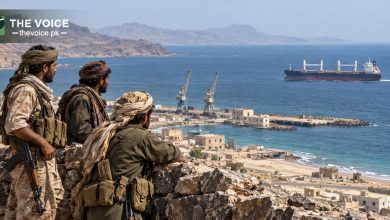
None of this came out of nowhere, though. The alert followed a week of attacks by Iran-aligned fighters that have dragged the kingdom deeper into the US-Iran war. The Houthis have seized parts of Yemen’s Red Sea coast overlooking the Bab el-Mandeb, one of the most important shipping straits on the planet and in doing so, put Saudi oil exports under real pressure.
Pakistan’s response
Prime Minister Shehbaz Sharif’s reaction came fast, and it wasn’t subtle. “I condemn in the strongest possible terms the dastardly and heinous attempted drone attack against the Holy Site of Makkah Al-Mukarramah,” he wrote, going on to say Pakistan “stands unwaveringly, shoulder to shoulder with the brotherly Kingdom of Saudi Arabia, in the defence of its sovereignty and territorial integrity, as well as for the security and sanctity of the Haramain Sharifain, a duty that every Pakistani carries close to their heart.” He said Pakistanis were “saddened and perturbed” by what he called an outrageous act, and praised Saudi forces for the interception.
But he also struck a second, quieter note alongside it. Sharif urged everyone involved in the widening Middle East conflict to show “maximum restraint” and step back from further escalation. “Our region has already suffered far too much from conflict,” he said. “Dialogue and diplomacy remain the only sustainable path towards peace.”
One small detail stood out, though, and it’s worth pausing on: Sharif never actually named the Houthis in his statement, even as Saudi authorities publicly pointed the finger at them. That omission probably says more about the position Islamabad finds itself in right now than any of the strong language did.
The pact question nobody’s comfortable answering
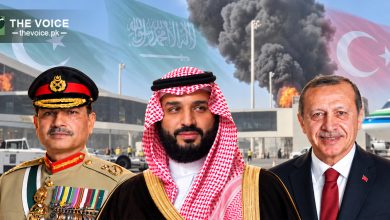
Which brings us to the harder conversation that’s been quietly building around Pakistan’s role in all this. The Mecca Joint Defence Agreement, signed back on August 7 between Saudi Arabia, Turkey and Pakistan, states that an armed attack on any one of the three will be treated as an attack on all three. On paper, that’s about as unambiguous a commitment as you’re likely to find.
In practice, Islamabad has been considerably more careful. ISPR Director General Lt Gen Ahmed Sharif Chaudhary told Al Arabiya on Wednesday that the pact is “defensive. There’s nothing aggressive. There are no regional aspirations. It is collective deterrence.” Just last week, Pakistan said there had been no discussions whatsoever about a military response against the Houthis under the agreement.
Predictably, critics abroad have jumped on the gap between what the pact promises and how cautiously Pakistan is behaving. Whether that criticism is really fair is another matter entirely. Pakistan has been fairly consistent in framing this as deterrence, not as a trigger for joining someone else’s war and honestly, given how stretched the country already is with its own crises at home, the hesitation isn’t difficult to understand.
Where this leaves things
The Organisation of Islamic Cooperation condemned the attacks on Makkah and the Madinah region too, saying they violated the sanctity of Islamic holy sites, endangered civilians, and spread fear among Muslims everywhere, describing such attacks as terrorism that runs against both Islamic values and international law.
So to be clear, there’s no war being fought inside Makkah. The drone never reached the city, and pilgrims carried on performing Umrah at the Grand Mosque throughout. But the attempt itself, contested as it still is, has pushed this conflict into genuinely uncharted territory. And for Pakistan, a country bound to the kingdom by faith, history, and a good deal of financial dependence, now holding a defence pact facing its first real test, the weeks ahead may end up demanding something rather more concrete than carefully worded statements.
References
- The Express Tribune, “PM condemns ‘dastardly and heinous’ attempted drone attack on Makkah, reaffirms support for Saudi Arabia,” September 16, 2026
- Arab News Pakistan, “‘Outrageous act’: Pakistan PM condemns attempted Houthi drone attack on Makkah,” September 16, 2026
- The National, “Saudi-led coalition says Houthi drone destroyed near Makkah,” September 16, 2026